
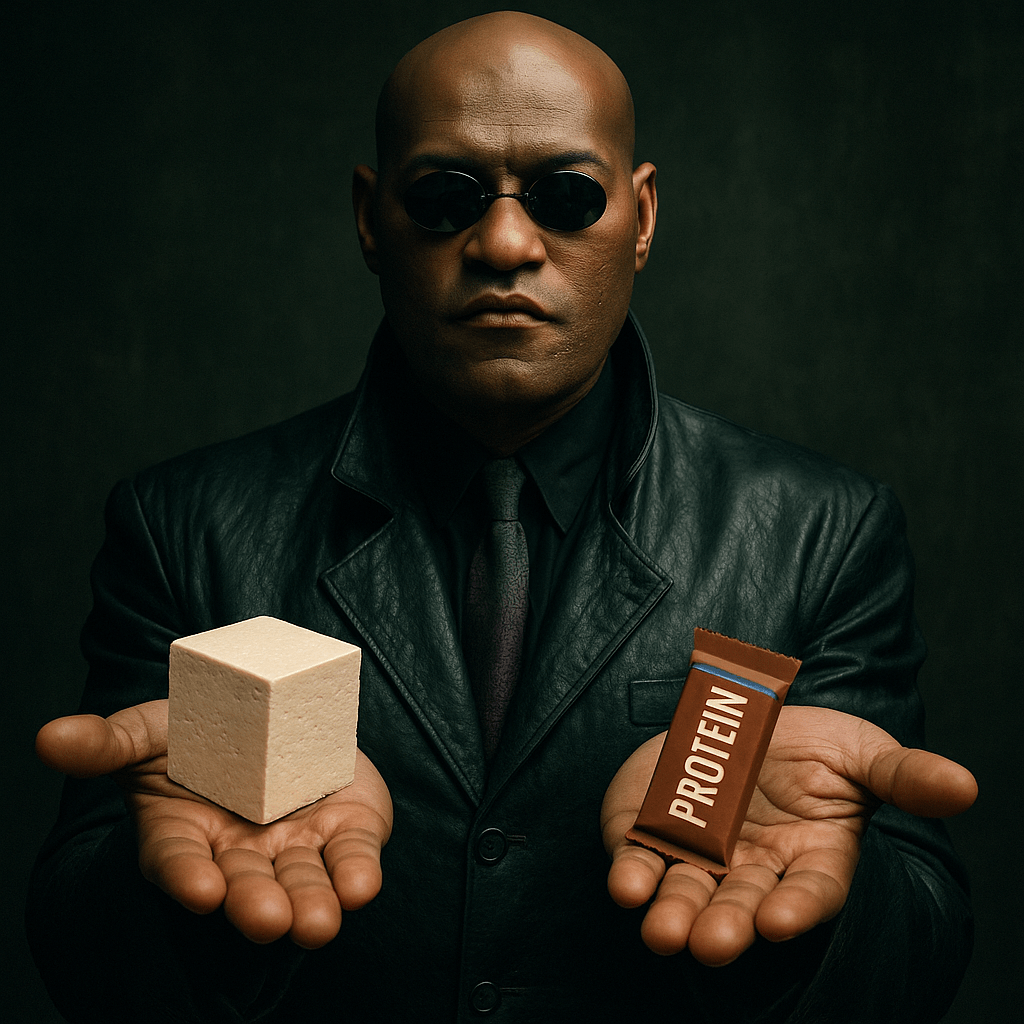
When choosing a protein source for fitness goals, it’s important to compare not just protein content but overall nutrition. This outline will compare a 100g serving of tofu against a 100g equivalent of The Sarco Bar (Bangladesh’s first designer protein bar) . We’ll break down their macronutrients – protein, fat, and carbohydrates (including fiber and sugar) – and analyze which option is more beneficial for goals like muscle building and fat loss. We’ll also consider protein quality (bioavailability), ingredient quality, satiety, convenience, cost, and practical usage for fitness enthusiasts.
Nutrient Comparison of a Block of Tofu versus The Sarco Bar (Per 100g)
To get an equal basis, here’s a side-by-side nutrient breakdown of firm tofu and the original Sarco Bar, standardized to 100g portions:
| Nutrient | Tofu(100g) | Sarco Bar(100g) |
| Calories | ~144 kcal | ~315 kcal (approx.) |
| Protein | ~17 g (soy protein) | ~22 g (whey protein) |
| Fat | ~9 g | ~11 g (from nuts & cocoa, est.) |
| Carbohydrates | ~3 g (2 g fiber, ~1 g sugar) | ~30–35 g* (high fiber, <5 g sugar) |
Key Takeaways:
Tofu is a low-calorie, moderate-protein whole food, whereas the Sarco Bar is a higher-calorie, high-protein snack. Per 100g, the Sarco Bar provides more protein but also more total carbs (though much of it is fiber) and slightly more fat. Tofu has virtually no sugar and minimal carbs, while the Sarco Bar contains a small amount of sugar (under 5g per bar) . Next, we’ll examine what these differences mean for muscle gain and fat loss.
Protein Quality and Muscle-Building Potential
Complete Proteins:
Both tofu and the Sarco Bar offer complete proteins containing all essential amino acids. Tofu’s protein (from soy) is complete and nutrient-dense , and the Sarco Bar’s protein comes from 100% premium whey – a fast-digesting dairy protein known for muscle recovery.
Protein Content:
Per 100g, the Sarco Bar edges out tofu in protein (≈22g vs 17g). In one standard serving (a ~95g Sarco Bar), you get about 20–22g of protein , while 100g of firm tofu provides ~17g . This means the bar delivers a hefty dose of protein in a small package, which can help reach daily protein targets easily.
Bioavailability:
Whey protein (in the Sarco Bar) is extremely high in bioavailability and rich in leucine, a key amino acid for muscle protein synthesis. In fact, whey contains more leucine than soy protein , which generally gives whey an edge in stimulating muscle growth. Soy protein (tofu) is also high quality but slightly lower in leucine content.
Research shows that both soy and whey can support muscle gains, but whey has long been prized for its rapid absorption and potent effect on muscle-building due to leucine . Tofu’s protein may digest more slowly and tofu contains some antinutrients (like trypsin inhibitors) that can mildly reduce protein absorption , but these effects are small in the context of a balanced diet.
Muscle-Building Bottom Line:
For a post-workout snack or a quick protein hit, the Sarco Bar’s whey protein is advantageous – it delivers around 20g of high-biological-value protein immediately . Tofu can absolutely contribute to muscle building as well (and has been a staple for vegetarians/vegans), but you might need a larger portion of tofu to match the Sarco Bar’s protein, which also brings extra calories. Both can be used to meet protein needs, but the Sarco Bar is a more concentrated protein source, while tofu provides protein plus other nutrients in a more filling form.
Carbohydrates, Sugar, and Fiber: Impact on Fat Loss
Total Carbs and Sugar:
Tofu is very low in carbohydrates (~3g/100g, with only ~1g natural sugar) . This makes tofu a keto- and diabetes-friendly choice, with minimal impact on blood sugar. In contrast, the Sarco Bar has more total carbs (estimated ~30g per 100g, which is roughly 25–30g in one bar) because it contains ingredients like a peanut butter wafer and dark chocolate coating .
However, the bar is designed to be low in sugar – each bar has under 5g of sugar , which is far less than typical candy bars or some commercial protein bars. The sweetness in the Sarco Bar likely comes from a small amount of natural sugar (possibly from dark chocolate or added sweeteners) but it’s kept minimal.
Fiber Content:
A major plus for the Sarco Bar is its high fiber content. The bar is described as “rich in fiber”, which helps promote satiety and steady energy . Although exact fiber grams aren’t listed publicly, the emphasis on fiber suggests it’s significantly higher than tofu’s ~2g fiber per 100g. This added fiber (from ingredients like oats, nuts, or added fibers) can slow carbohydrate absorption, preventing large blood sugar spikes and helping one feel full longer . Tofu does contain some fiber (about 2g/100g from the soybeans ), but it’s not a major fiber source.
Fat Loss Considerations:
For those aiming to lose fat, controlling calorie intake and managing hunger are key. Tofu, being very low in calories for the amount of protein, is advantageous – you can eat a large volume of tofu for relatively few calories, which can keep you full on a diet. Its minimal sugar and carb content make it easy to fit into low-carb or low-calorie meal plans.
The Sarco Bar, on the other hand, packs ~300 calories in one bar . While it provides valuable protein and fiber for satiety, 300 kcal is not negligible – it’s more of a small meal or substantial snack. However, compared to grabbing a sugary chocolate bar or dessert, the Sarco Bar’s calories are nutrient-dense (protein-rich, with fiber and healthy fats) and thus “low calorie” for what it delivers . It can satisfy a sweet craving with far less sugar than a typical treat, which can actually be helpful in a fat-loss diet (preventing feelings of deprivation). The fiber and protein in the bar also help keep hunger at bay, even when you’re cutting calories .
Summary – Carbs & Weight Management:
Tofu is an extremely low-carb option, ideal for those who want to minimize sugars and calories – making it excellent for fat loss meals. The Sarco Bar contains more carbs, but they are structured to be fitness-friendly (high fiber, low sugar). If you’re on a strict low-carb regimen, tofu is the clear winner. But if you have some carb allowance, the Sarco Bar can be compatible with fat loss as an occasional snack, as long as you budget its ~300 kcal into your day. Its fiber and protein will work in your favor by keeping you full and your blood sugar stable , but moderation is key due to the caloric density.
Fat Content and Nutrient Density
Amount and Type of Fat:
Tofu and the Sarco Bar both contain moderate fat, but from different sources. 100g of firm tofu has about 9 grams of fat . Most of tofu’s fat is heart-healthy polyunsaturated fat, including omega-6 and some omega-3 fatty acids, and it contains no cholesterol (since it’s plant-based). The Sarco Bar’s fat comes from natural sources like peanuts, peanut butter, and dark chocolate (cocoa butter).
These contribute a mix of fats: peanuts are rich in monounsaturated fats (good for heart health), while cocoa butter provides saturated fat. The saturated fat in dark chocolate is largely stearic acid, which has a neutral effect on cholesterol in the body. The bar likely has roughly 10–12g of fat per 100g (around 8–10g per bar, estimated), given its ingredients. Importantly, these are “healthy fats” in the sense that they come from nuts and cocoa, not trans fats or cheap hydrogenated oils .
Micronutrients:
Beyond macros, tofu shines in nutrient density. A 100g serving of tofu provides high levels of calcium, iron, manganese, and other minerals , especially if it’s calcium-set tofu. These micronutrients benefit bone health, oxygen transport (iron), and more. The Sarco Bar, being a processed product, isn’t advertised for its vitamins/minerals – though it likely provides some calcium (from whey and milk) and iron or magnesium (from cocoa). However, those aren’t emphasized in the product info. If micronutrients are a priority, tofu (and whole foods in general) have an edge, whereas the Sarco Bar is formulated mostly for macro balance and taste.
Implications for Diet:
For muscle building diets, some fat is beneficial for hormone production and satiety. Neither tofu nor the Sarco Bar is high in fat; they both provide a moderate amount. Tofu’s fat content is roughly 56% of its calories, whereas the Sarco Bar’s fat is likely around 30% of its calories (since it’s more carb/protein heavy). If someone is trying to limit fat intake (for example, on a very low-fat diet), both are relatively moderate, but tofu’s percentage of calories from fat is actually higher (due to being so low-carb).
Conversely, if one is on a low-carb/high-fat diet, tofu might fit better because it’s low-carb, whereas the Sarco Bar has more carbs. However, the fat in the Sarco Bar is from peanut butter and dark chocolate, which many consider a “clean” trade-off for a treat. In summary, both options offer mostly healthy fats – tofu’s plant oils and the bar’s nuts/chocolate – so neither is “bad” in terms of fat quality. Just be mindful that fat is calorie-dense: portion sizes matter for both if you’re calorie-counting.
Satiety and Appetite Control
Staying full is crucial whether you’re building muscle (to avoid unhealthy snacking) or cutting fat (to resist overeating). Here’s how tofu and the Sarco Bar stack up on satiety:
- Tofu: Tofu is solid and contains a lot of water, so it’s quite filling for its calories. A 100g block of tofu can be eaten as part of a meal (e.g. in a stir-fry or salad) and provides protein with a bit of fiber – both of which contribute to fullness. Because tofu is usually eaten cooked in dishes, you often pair it with vegetables or whole grains, increasing the meal’s volume and fiber further. For example, tofu and veggies in a curry or sauté can be very satisfying while still relatively low calorie. Many people find that high-protein whole foods like tofu help reduce hunger between meals.
- The Sarco Bar: The Sarco Bar is smaller in volume (one bar is <100g), but it is engineered to be satiating despite its candy-bar-like form. Thanks to its high protein and fiber content, it helps “promote satiety and support stable energy levels” . Users have reported that the bar is filling for a snack, not leaving them crashing from sugar, unlike a regular chocolate bar. The combination of protein + fiber + healthy fats slows digestion and provides a steady release of energy – meaning you’re less likely to feel hungry again quickly. However, individual responses vary: some might find that because the Sarco Bar tastes like a treat (chocolate and peanut butter), it could trigger sweet cravings in a few cases. But for most, having a high-protein sweet snack can actually prevent bingeing on less healthy sweets, thereby aiding adherence to diet. One consideration: the Sarco Bar must be stored chilled (it’s a “frozen protein choco bar” per the maker) . Eating it cold and slowly could potentially enhance satiety, whereas tofu is eaten in normal meals.
Satiety Verdict:
Both foods use protein (and fiber, in the bar’s case) to keep you full. If you compare 300 calories of tofu vs 300 calories of Sarco Bar, the tofu (which would be ~200g of tofu) would likely physically fill your stomach more, simply due to volume. That can be an advantage if you struggle with hunger on a diet. On the other hand, the Sarco Bar can curb appetite effectively between meals or after a workout, and might keep you satisfied without needing additional food for a while . It’s a convenient way to tide you over, especially if you crave something sweet but don’t want to break your diet. In short: tofu fills you up by volume and is great as part of meals, whereas the Sarco Bar fills you up by macronutrient composition (protein/fiber) and is great as a standalone snack.
Convenience and Versatility
Tofu’s Use & Versatility:
Tofu is a raw ingredient that requires preparation. Its bland flavor makes it a culinary chameleon – it can absorb sauces and seasonings, used in stir-fries, curries, grilled, or even blended into smoothies for protein. This versatility is a pro: you can incorporate tofu into meals at any time of day (scrambled tofu for breakfast, tofu curry for dinner, etc.).
However, tofu is not a grab-and-go food. You typically need to cook or season it, and it’s perishable (needs refrigeration). If you meal-prep, you can cook a batch of tofu-based meals to have on hand, but you still need a fridge and microwave to reheat, etc. Tofu is readily available in supermarkets (including many Dhaka supershops) , but you might not find it at every small bazaar. In summary, tofu is convenient in the context of cooking at home, but not convenient as an on-the-go snack.
Sarco Bar’s Convenience:
The Sarco Bar shines in convenience. It’s essentially a protein supplement in the form of a tasty bar. You can eat it straight out of the package, no preparation needed. This makes it ideal for busy individuals – e.g. a quick breakfast on the commute, a post-gym snack, or an office treat. It was even marketed as a solution for those too busy for mixing protein shakes or cooking.
The only minor catch is that it’s meant to be kept frozen/chilled (likely to maintain texture and prevent melting of the dark chocolate coating in the Bangladeshi heat). This means you’d typically store them in the freezer and perhaps thaw slightly before eating. If you’re out and about, you’d want to consume it before it gets too melty. Despite that, it’s far more portable than tofu and doesn’t require kitchen equipment to consume.
Versatility of Use:
The Sarco Bar is a specific product with one flavor profile (rich dark chocolate and peanut) . You either eat it as is, or not at all – you can’t turn it into a savory dish or change its form (aside from maybe chopping it up as a topping). Tofu, conversely, can be used in a variety of recipes (savory stir-fries, grilled skewers, even smoothies or desserts like tofu pudding). This means tofu can prevent boredom if you like to cook creatively, whereas the Sarco Bar is a reliable same taste each time you eat one.
Bottom Line – Lifestyle Fit:
If you value quick and easy, the Sarco Bar is extremely practical – just unwrap and eat, with zero prep and easy portion control (one bar = one serving). It’s great for people who travel, have busy work schedules, or don’t cook often. If you enjoy cooking or want a multifunctional ingredient, tofu is wonderful because you can make myriad high-protein meals with it, but it demands time and effort in the kitchen. For a fitness enthusiast, one might use both: tofu at home in meals, and keep a Sarco Bar in the gym bag for convenience.
Cost and Accessibility
Tofu Cost:
Tofu is generally inexpensive per gram of protein. In many places, 100g of tofu is very affordable (since it’s made from soybeans, which are cheap). In Dhaka, tofu is available at supershops and perhaps some local producers, and while it might be a bit niche, it’s still relatively low-cost compared to imported health foods. You’re also getting a whole food for the price. If budget is a concern, buying tofu (or other local protein foods like lentils, eggs, etc.) is often more economical than specialty bars or supplements.
Sarco Bar Cost:
The Sarco Bar is a premium product. Based on the maker’s pricing, one bar originally cost ৳400 and is now about ৳300 (Bangladeshi Taka) . That’s roughly USD $2.8–$3 per bar. For that price, you get ~20g protein, which is on par with many imported protein bars or shakes. It’s definitely more expensive than an equivalent amount of protein from tofu or chicken or dal. The Sarco Bar’s cost factors in the use of imported whey protein and organic ingredients, as well as being a small-batch, first-of-its-kind product. The company does offer bulk packs (e.g. 10 bars for BDT 3000) , which might slightly reduce the per-bar cost, but it remains a higher-cost option for regular use.
Value Proposition:
If you’re strictly looking at taka per gram of protein, tofu (and other whole foods) will win easily. For instance, with ৳300 you could buy ingredients for multiple high-protein meals (like eggs, lentils, or tofu) that cumulatively yield far more than 20g protein. However, the Sarco Bar’s premium cost is for convenience and quality: you’re paying for a ready-made, great-tasting product that also supports local entrepreneurship in Bangladesh’s fitness industry. For some, the time saved and the enjoyment of a chocolate-peanut treat is worth the price. For others on a tight budget, the Sarco Bar might be an occasional treat rather than a daily staple.
Availability:
Tofu can be found in many grocery stores (though one may have to look in the refrigerated or specialty section). The Sarco Bar is sold online via Dhaka Protein Bars’ website and possibly through certain gyms or health stores locally. It’s not as ubiquitous as tofu or conventional snacks; you have to purposefully purchase it. Additionally, if it requires refrigeration, that could limit where it’s sold (likely not in every corner shop). So accessibility is somewhat limited to those in Dhaka who can order it. Over time, if it becomes more popular, it might become easier to find. But as of now, tofu is probably easier to source widely.
Pros and Cons of Tofu VS The Sarco Bar
Tofu – Pros:
- Lean Protein, Low Calorie: Tofu provides a good amount of protein (8–17g per 100g depending on firmness) for relatively few calories . This is great for fat loss or lean muscle gain without excess calories.
- Minimal Carbs & No Added Sugar: With only natural, negligible sugars and very low carb content, tofu won’t spike blood sugar and fits into low-carb diets easily .
- Nutrient-Dense: It’s packed with minerals like calcium, iron, and magnesium , contributing to overall health (bone health, oxygen transport, etc.).
- Complete Plant Protein: Soy is a complete protein with all essential amino acids , making tofu an excellent protein source for vegetarians and vegans.
- Versatile in Cooking: You can prepare tofu in countless ways (grilled, stir-fried, scrambled, etc.), incorporating it into various cuisines. This prevents boredom and allows combining it with other nutrient-rich foods.
- Cost-Effective: Generally, tofu is inexpensive compared to meat or protein bars, offering a budget-friendly protein source.
Tofu – Cons:
- Preparation Required: Tofu is not very appetizing straight out of the package. It requires cooking or seasoning to taste good, which means prep time and effort. Busy individuals may find this inconvenient compared to grab-and-go options.
- Lower Protein Density: By weight, tofu has less protein than concentrated supplements. You may need to eat a larger volume of tofu to match the protein in a smaller protein bar or shake. This could be challenging if you have a very high protein target or get full quickly.
- Soy Sensitivities and Myths: Some people have soy allergies or concerns (e.g. myths about soy affecting hormones). While moderate soy intake is proven to be safe for most people, this can be a perceived drawback. Those with thyroid issues or who need to limit soy for medical reasons would avoid tofu.
- Perishable: Tofu must be kept refrigerated and has a limited shelf life once opened. It’s not as long-lasting as dried or sealed protein products.
- Taste and Texture: Not everyone likes tofu’s texture (which can be soft or “spongy” if not cooked crisply). If poorly prepared, it can be bland. It takes some culinary skill to make tofu dishes flavorful, whereas a bar or flavored shake is pre-engineered for taste.
The Sarco Bar – Pros:
- High Protein Dose: Each bar delivers ~20g of high-quality whey protein , which is excellent for muscle repair and building. It’s an easy way to boost protein intake without eating large quantities of food.
- Low Sugar, High Fiber: The bar manages to satisfy sweet cravings with <5g sugar per serving , far lower than a typical chocolate snack. It’s also rich in fiber, which helps keep blood sugar stable and promotes fullness . This makes it a fitness-friendly treat that won’t wreck your diet.
- Quality Ingredients: Made with 100% imported whey, real dark chocolate, and natural peanut butter, the Sarco Bar emphasizes clean, organic components . You’re avoiding the high-fructose corn syrup, trans fats, and fillers that some mass-market bars have.
- Convenience & Portability: No prep needed – it’s a ready-to-eat bar. This is perfect for on-the-go lifestyles. You can keep one in your bag for a post-workout refuel or a healthy office snack. It’s a neater alternative to protein shakes, with no mixing or mess.
- Taste and Enjoyment: With a dark chocolate shell and crunchy peanut butter wafer center , the Sarco Bar feels like a dessert. It can make sticking to a diet easier because you don’t feel deprived of chocolate or sweets. Many users describe it as delicious yet filling, a rare combo for a “healthy” snack.
- Muscle Recovery Benefits: The fast-digesting whey protein and moderate carbs can be beneficial right after a workout when your muscles need protein and a bit of carbs for recovery. It’s a convenient post-exercise choice to kickstart muscle repair, especially if you can’t have a full meal immediately.
The Sarco Bar – Cons:
- Higher Calorie Density: At ~300 kcal per bar , the Sarco Bar is relatively calorie-dense. It’s easy to eat one quickly; if you’re not careful, having multiple bars could exceed your calorie goals. Those on strict fat-loss diets need to account for it as they would a small meal.
- Costly: The Sarco Bar is much more expensive than equivalent protein from whole foods. As a premium product (about ৳300 or ~$3 per bar) , it might strain the budget if consumed daily. In contrast, one could have a whole food meal for that price in Dhaka. This makes the bar less accessible for some people to use regularly.
- Processed Food: Even with organic ingredients, it’s still a processed, packaged item. Some fitness enthusiasts prefer whole foods for the bulk of their diet and might view a bar as a supplement or occasional food, not a staple. Over-relying on bars could mean missing out on the diverse nutrients whole foods provide.
- Not Vegan (and Contains Dairy): The inclusion of whey protein and milk ingredients means the Sarco Bar is off-limits for vegans and may not suit those with lactose intolerance (whey isolate has little lactose, but extremely sensitive individuals might have issues). Tofu, in comparison, is vegan and lactose-free.
- Requires Cold Storage: Since it’s a “frozen protein choco bar” , you need to keep it chilled/frozen until consumption. This could be inconvenient – it’s not something you can stock in a desk drawer or carry around all day in a warm climate unless you consume it quickly. This limits its portability slightly (you may need a cooler pack if taking it outdoors for long).
- One Flavor/Variety: Currently, the Sarco Bar comes in essentially one flavor profile (chocolate-peanut). If someone doesn’t enjoy that flavor or gets tired of it, there’s no alternative within this product line yet. Tofu, however, can take on any flavor you cook it with, so it never “tastes the same” unless you make it so.
Practical Recommendations for Fitness Enthusiasts
For Muscle Building:
If your goal is to build muscle and you struggle to eat enough protein, The Sarco Bar can be a valuable addition to your diet. Use it as a convenient post-workout snack or between meals to boost protein intake. The high-quality whey will provide your muscles with plenty of amino acids for growth, and the bar’s extra calories can help if you need to be in a surplus. However, don’t rely solely on bars.
Tofu and other whole foods should still be included in your diet for a balanced nutritional intake. For example, you might have tofu or other protein-rich whole foods in your regular meals, and enjoy a Sarco Bar after a training session when you need quick protein. This way, you get the best of both worlds – whole-food nutrition and supplement-like convenience.
Also note that soy protein (tofu) can complement whey: having a variety of protein sources might even be beneficial. If you’re vegetarian or don’t consume dairy, tofu (and other plant proteins) will be your muscle-building mainstays – you can still build muscle effectively; just ensure you eat enough total protein and calories.
For Fat Loss:
When trying to lose fat, every calorie counts. Primarily fill your diet with very nutrient-dense, low-calorie foods – tofu is excellent in this role. You can make tofu the star of meals (like tofu and vegetable stir-fry) to feel full on fewer calories. Because tofu is high in protein and moderate in fiber, it will help preserve muscle and control appetite during a calorie deficit.
The Sarco Bar can still have a place in a fat-loss plan, but use it strategically. You might treat it as an occasional reward or a tool to crush sweet cravings. For instance, if you’re hit with late-night dessert cravings, having a Sarco Bar instead of ice cream or a candy bar would satisfy your sweet tooth with far more protein and fiber and far less sugar. It’s a smart swap that can keep you on track . Just remember to budget those ~300 calories – maybe substitute it for what would’ve been a larger 500-calorie dessert.
Also, because the bar is filling, it can replace a small meal when you’re in a pinch, but don’t skip out on veggies and whole foods entirely. You could also split the bar in half if you want a ~150-calorie treat at two different times. Meanwhile, tofu can be a daily staple – it’s so low-calorie for the protein it provides that it will help create the calorie deficit you need for fat loss without making you feel deprived.
General Health and Diet Balance:
Both tofu and the Sarco Bar can coexist in a balanced diet. You don’t have to choose one exclusively. For overall health, prioritize whole foods like tofu, lean meats, fruits, and veggies as the core of your diet. Think of the Sarco Bar as a supplemental item – it’s even marketed by the company as a “protein supplement bar” for when you’re busy. Use it in situations where it adds value (convenience, adherence, extra protein). For example, on a day you’re traveling or stuck at work with no time for a proper meal, having a Sarco Bar is much better than skipping protein or grabbing a sugary snack. On days you have time to cook, you might rely more on tofu, eggs, chicken, etc., and maybe save the bar for dessert.
Dietary Restrictions:
If you are vegan or avoid dairy, stick to tofu or other plant proteins – the Sarco Bar isn’t suitable for you due to whey. If you have no issues with dairy, enjoy both. If lactose is a problem, check if the Sarco Bar uses whey isolate (which has minimal lactose); it might be fine, but test carefully. Tofu is lactose-free and could be a better protein source in that case.
Muscle vs. Fat Loss Goals:
For those primarily focused on muscle gain (bulking), the slightly higher calories of the Sarco Bar are actually a bonus – it helps you eat more and provides energy for training. You could incorporate 1 bar a day as a convenient calorie/protein boost. For those primarily focused on fat loss, tofu will likely appear more often in your meal plan (because it’s so lean), and the Sarco Bar perhaps a few times a week as a treat or handy protein source when needed. In either scenario, hitting your daily protein goal is critical – and both foods help with that, so include them as needed to reach at least ~1.2–2.0 g of protein per kg body weight daily .
Hydration and Cooking Methods:
Note that tofu can come in different forms (silken, firm, etc.). Opt for firmer tofu if you want higher protein density (firm tofu has less water, more protein per gram). Cooking tofu with minimal added fat (grilling, baking, or using small amounts of healthy oil) will keep the calories lower, which is better for fat loss. The Sarco Bar doesn’t involve cooking, but since it’s stored cold, some people like to let it sit a few minutes so it’s not rock hard – a small tip to enjoy it more.
Finally, always consider personal preference and sustainability. The best diet is one you can stick to. If you despise tofu’s taste but love the Sarco Bar, then forcing yourself to eat tofu might not last – maybe try other whole foods for meals and enjoy the bar to hit protein goals. Conversely, if you prefer savory foods and don’t care for chocolate, you might skip the bar and use tofu/other foods exclusively. Both tofu and the Sarco Bar can fit into a healthy lifestyle; they simply serve slightly different needs. Use this comparison to decide how each might serve your goals and lifestyle best.
Conclusion
Tofu vs. The Sarco Bar – which is better? It ultimately depends on your goals and circumstances. Tofu is a time-tested, whole-food protein that is low in calories and high in nutrients, making it fantastic for everyday meals, especially when you want to keep calories low and volume high (as in fat loss phases). The Sarco Bar is a modern, purpose-built fitness snack that delivers convenience and taste with a solid nutritional profile – perfect for busy individuals and as a protein-packed treat.
For muscle building, the Sarco Bar’s whey protein offers a slight edge in protein quality and convenience, so including it around workouts or busy days can help meet your protein needs and support muscle recovery . Don’t discount tofu, though; it can be part of muscle-building meals (e.g., a tofu stir-fry after a workout provides protein and carbs). You might simply need larger servings of tofu to match the protein in a Sarco Bar.
For fat loss, tofu is a superstar due to its low calorie density – you can fill up on it with minimal calorie impact. The Sarco Bar can still be your friend, offering a satisfying sweet bite that keeps you on track without lots of sugar , but portion control is key because it does contain ~300 kcal.
Bioavailability & quality: Whey (Sarco Bar) is slightly superior for fast muscle protein synthesis, but soy (tofu) is also a complete protein and will get the job done for most people . If you have dietary restrictions (vegan, etc.), tofu would be the default choice.
Satiety & adherence: Both will help with fullness, but in different ways – tofu by bulk, Sarco Bar by fiber/protein composition . Many find a combination of whole foods and convenient snacks works best to stick with a diet long-term.
In conclusion, you don’t necessarily have to pick one over the other universally. A smart approach for fitness enthusiasts is to leverage tofu in regular meals (for affordable, lean nutrition) and use The Sarco Bar strategically (for times you need convenience or a motivational treat that still aligns with your macros). When used together as part of a balanced diet, they can both contribute to your muscle-building and fat-loss success. Always remember to monitor your overall calorie and protein intake, and adjust the amounts of tofu, Sarco Bars, or other foods according to your individual needs. With the right balance, you can enjoy the benefits of both a traditional protein source and a modern protein snack on your journey to fitness.
Want More Science-Backed Nutrition Tips?
For additional fitness tips and personalized workout plans tailored to your goals, be sure to follow our blog.